Coin Collection Value Guide
Understanding what makes coins valuable
Coin value depends on whether a coin is primarily a bullion coin (valued for metal content) or a numismatic coin (valued for rarity and collector demand). Many coins have both bullion and numismatic value.
Bullion Coins
Bullion coins are valued primarily for their precious metal content. Their price tracks closely with the current spot price of gold or silver.
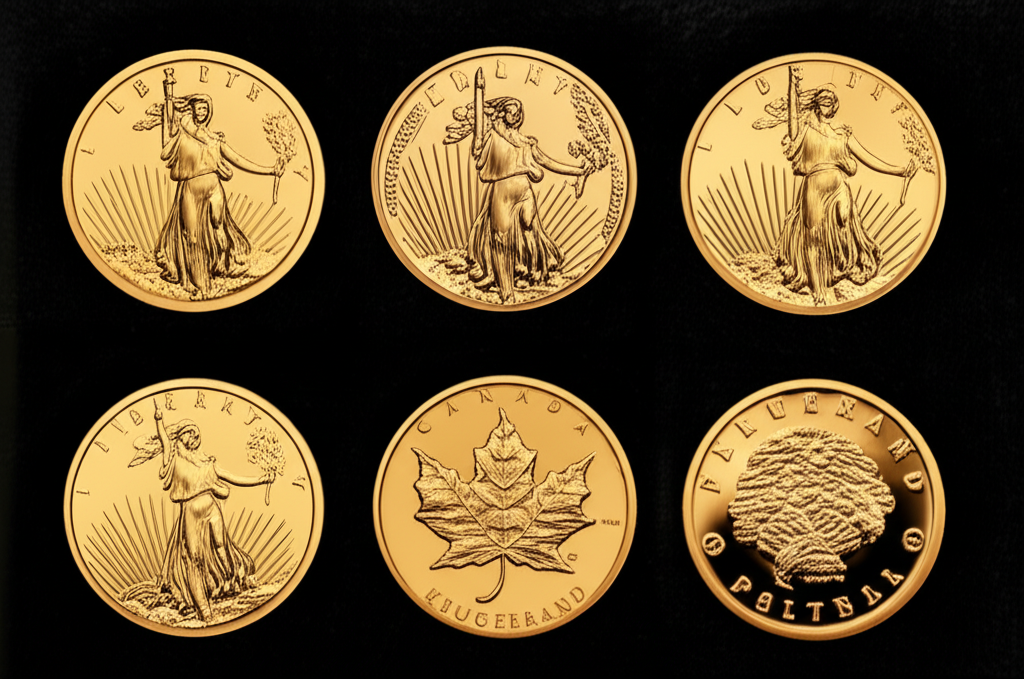
Common Gold Bullion Coins
- American Gold Eagle — The most widely recognized US gold bullion coin
- Canadian Maple Leaf — Known for its .9999 fine gold purity
- South African Krugerrand — The original modern gold bullion coin
- Austrian Philharmonic — Europe's most popular gold bullion coin
Common Silver Bullion Coins
- American Silver Eagle — The official US silver bullion coin, containing 1 troy ounce of .999 silver
- Canadian Silver Maple Leaf — Contains 1 troy ounce of .9999 fine silver
Bullion coin values are straightforward to calculate because they track the current market price of their metal content.
Numismatic Coins
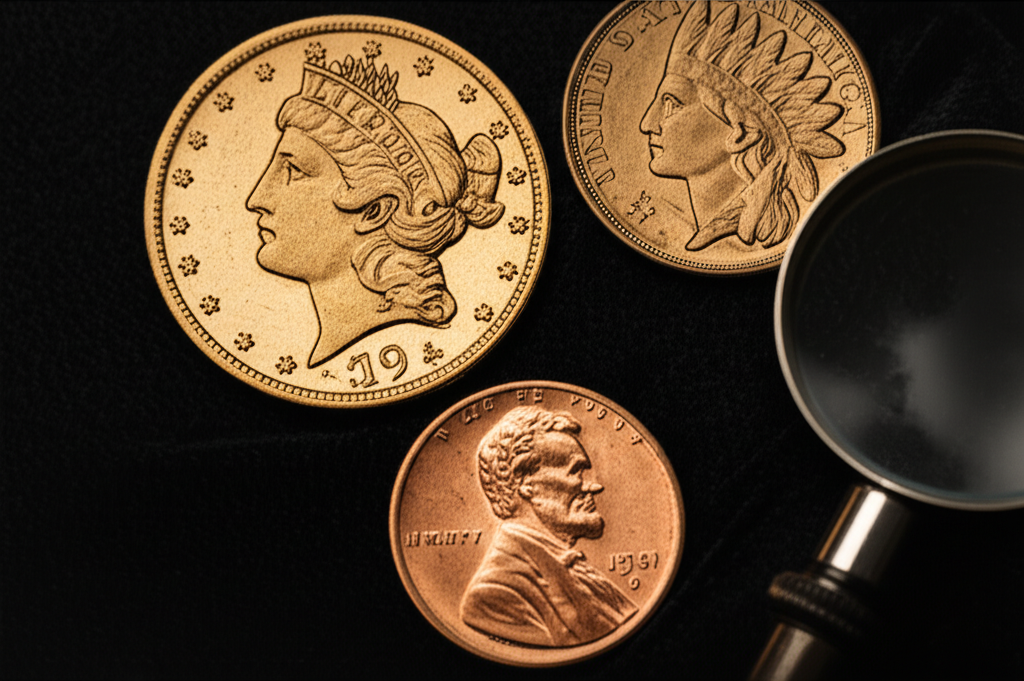
Numismatic coins are valued for their rarity, historical significance, and collector demand. These coins can be worth significantly more than their metal content alone.
Key Factors in Numismatic Value
- Mint year — Older and historically significant years are often more valuable
- Mint mark — Indicates which facility produced the coin
- Condition (grade) — Better-preserved coins command higher prices
- Mintage numbers — Lower mintage generally means greater rarity
Coin Grading Scale
Coin condition is measured on a standardized grading scale that ranges from Poor (P-1) to Perfect Uncirculated (MS-70). Coins in better condition are almost always worth more. Key grades include:
- Good (G-4 to G-6) — Heavily worn but major details visible
- Fine (F-12 to F-15) — Moderate wear with clear details
- Extremely Fine (EF-40 to EF-45) — Light wear on high points only
- Mint State (MS-60 to MS-70) — No wear; ranges from bag-marked to perfect
Silver Coins
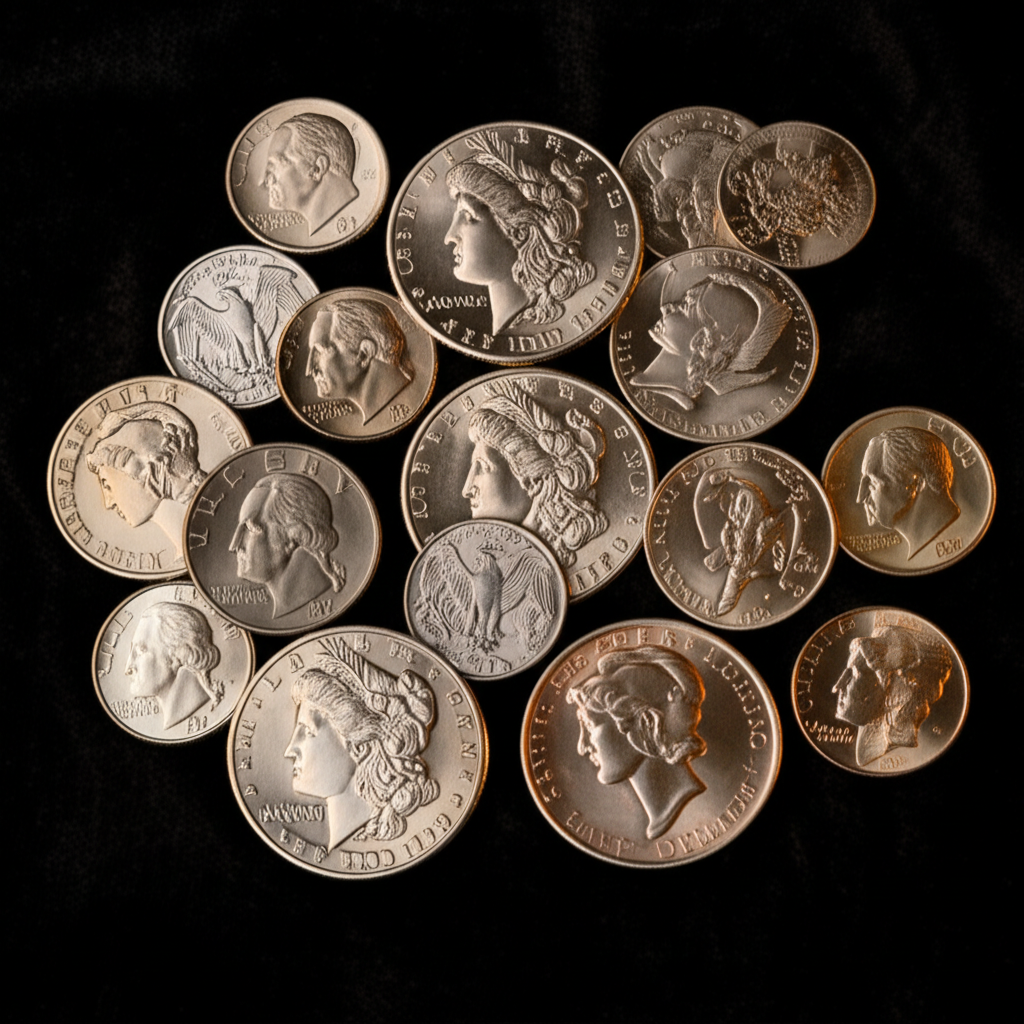
Many US coins minted before 1965 contain significant amounts of silver. These are commonly referred to as "junk silver," though their metal value is anything but junk.
90% Silver Coins (Pre-1965)
US dimes, quarters, and half dollars minted before 1965 contain 90% silver. Even in worn condition, these coins have substantial metal value based on current silver prices.
- Pre-1965 US dimes, quarters, and half dollars contain 90% silver
- Kennedy half dollars (1965-1970) contain 40% silver
- Morgan silver dollars (1878-1921) are especially sought after by collectors
- Peace silver dollars (1921-1935) are also popular with both collectors and silver buyers
Silver dollars, particularly Morgan and Peace dollars, often carry both significant metal value and numismatic premiums depending on their date, mint mark, and condition.
Factors Affecting Coin Value
Whether you have a single coin or an entire collection, the same fundamental factors determine what your coins are worth.
- Metal content and current spot price — The baseline value for any precious metal coin
- Rarity and mintage numbers — Fewer coins produced generally means higher value
- Condition and grade — Well-preserved coins are worth more
- Historical significance — Coins tied to notable events or eras may carry premiums
- Collector demand — Market interest in specific coins fluctuates over time
- Mint marks and errors — Certain mint marks and striking errors can dramatically increase value
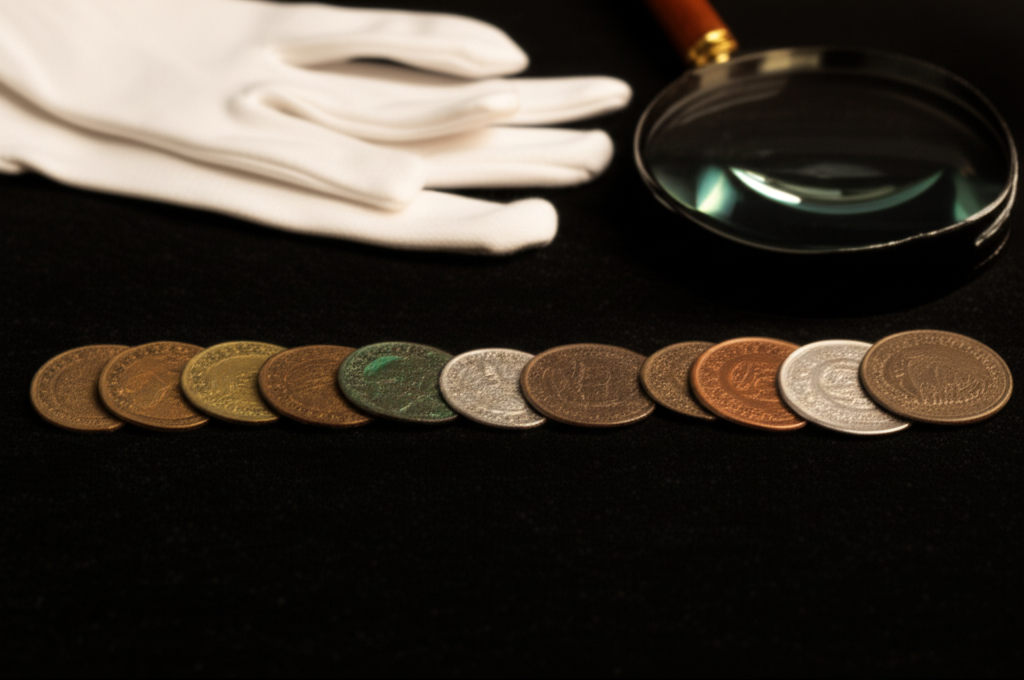
Have a Coin Collection?
Get a professional evaluation from a licensed precious metals buyer. No obligation.