How Much Is My Gold Worth?
Understanding the factors that determine your gold's value
The value of gold jewelry depends on three main factors: karat purity, weight, and the current market price of gold. A licensed evaluator can test and weigh your gold items to determine their precise value.
Gold Purity and Its Effect on Value
Not all gold jewelry is the same purity. The karat rating tells you what proportion of the metal is actually gold, and this directly affects how much it is worth.
- 24k is pure gold, while 14k contains 58.3% gold
- Higher karat means more gold content, which means more value per gram
- Even lower-karat items (10k, 14k) contain meaningful amounts of gold
Stamps to Look For
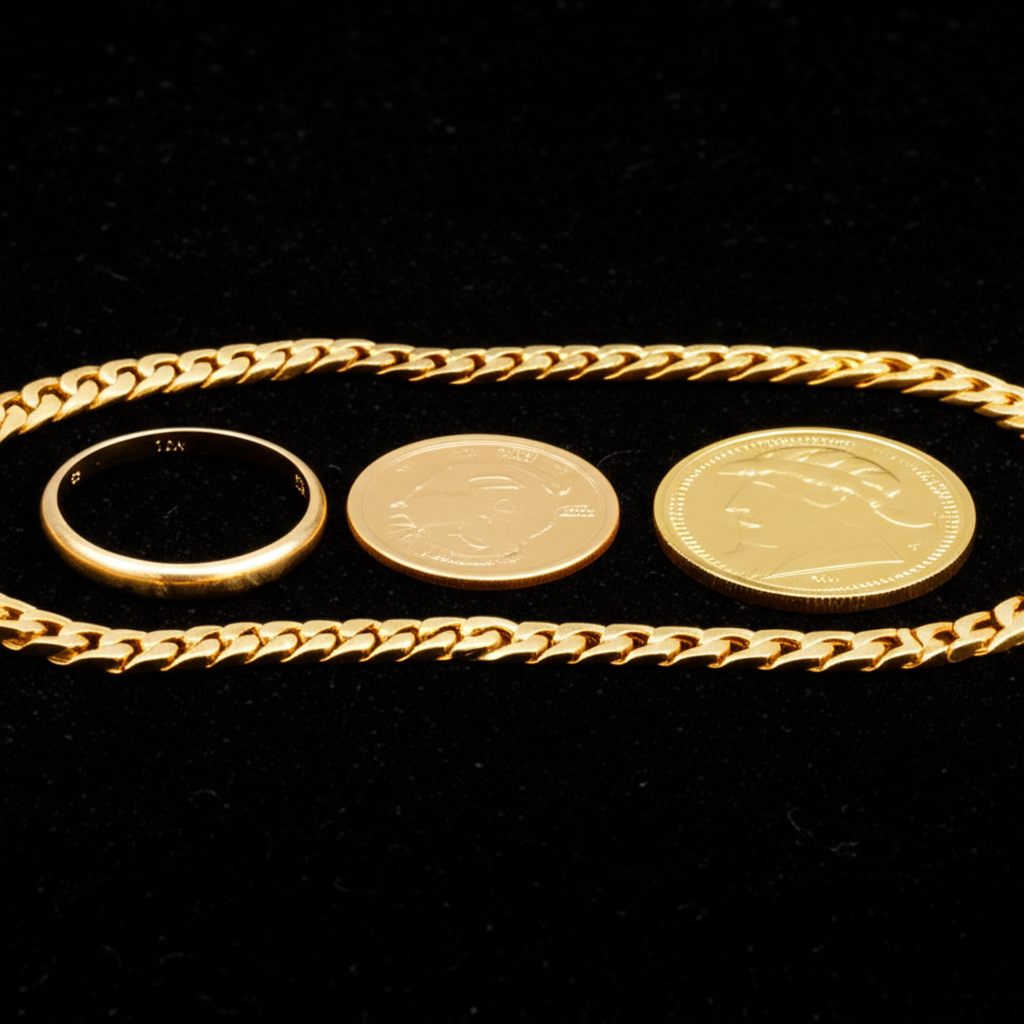
Check your jewelry for karat stamps: 10k, 14k, 18k, 22k, 24k. You may also see European-style numeric stamps: 417 (10k), 585 (14k), 750 (18k), 916 (22k), and 999 (24k). These markings indicate the gold purity of the item.
Gold Weight Measurement
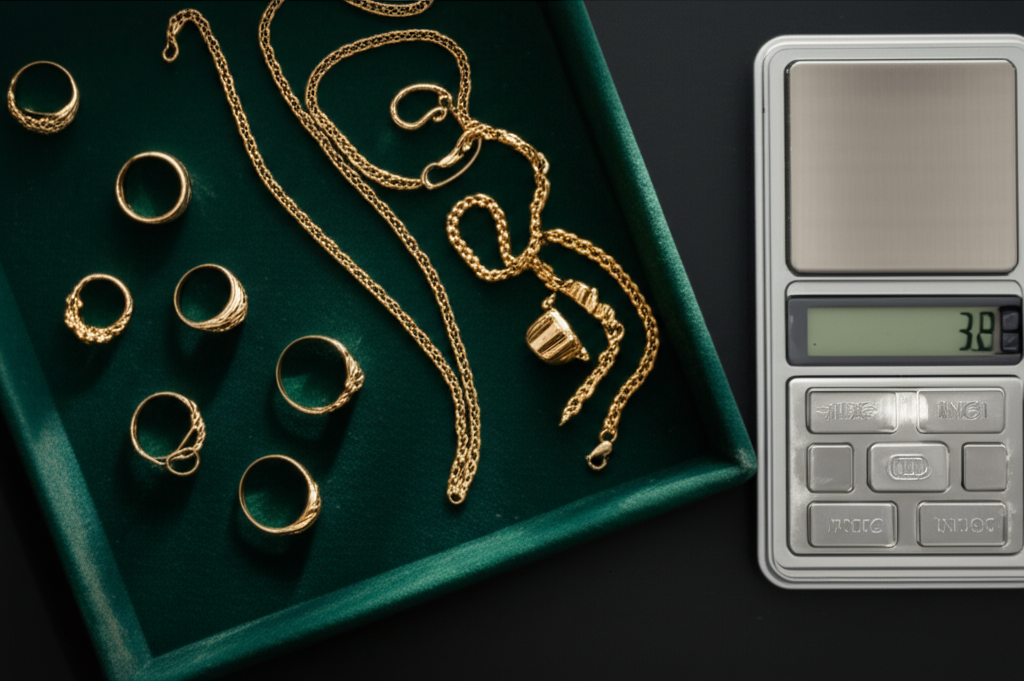
The weight of your gold items is a key factor in determining value. Gold is weighed using precision scales for accuracy.
- Gold is weighed in grams or troy ounces
- Heavier items contain more gold and are worth more
- Even small items can add up — a collection of rings and chains can contain significant gold
- 1 troy ounce equals 31.1 grams
Market Price Factors
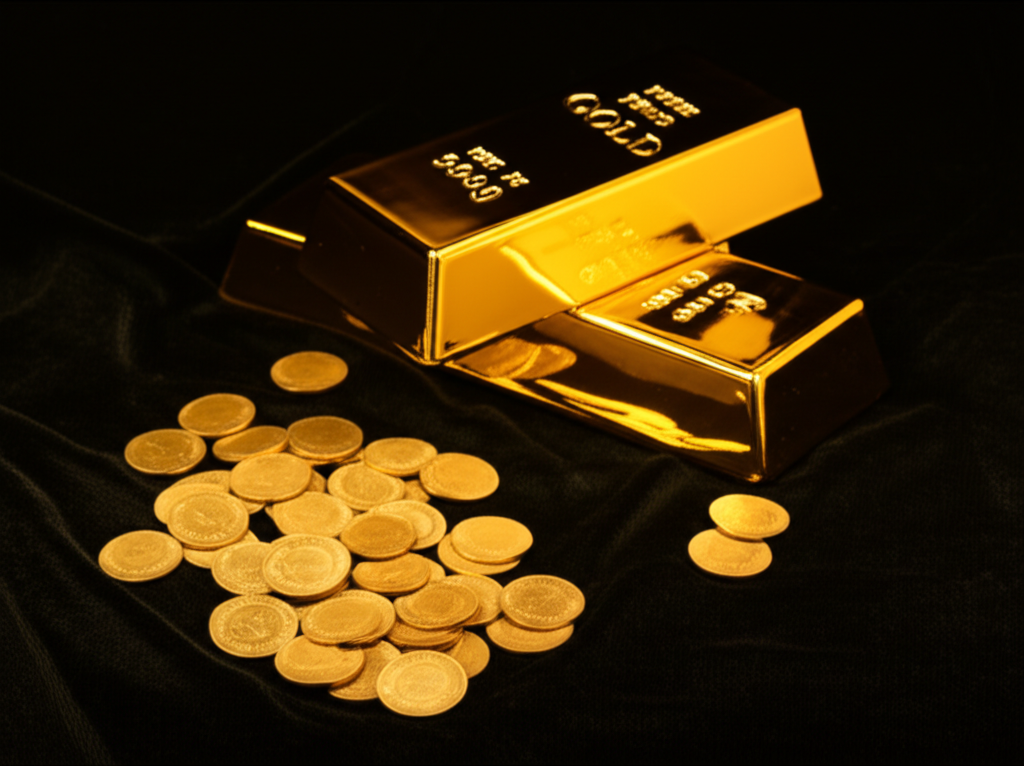
The price of gold changes throughout each trading day based on global supply and demand. Understanding market conditions helps you know when your gold may be at its highest value.
- Gold price fluctuates daily based on global markets
- Gold is currently at historically high prices
- Value is calculated using the spot price at the time of evaluation
- The spot price represents the current market rate for one troy ounce of pure gold
Example Calculations
These examples illustrate how purity and weight combine to determine the amount of pure gold in an item.
14k Gold Ring
A 14k gold ring weighing 5 grams contains approximately 2.9 grams of pure gold (5g x 0.583).
18k Gold Chain
A heavy 18k gold chain weighing 50 grams contains approximately 37.5 grams of pure gold (50g x 0.75).
10k Gold Bracelet
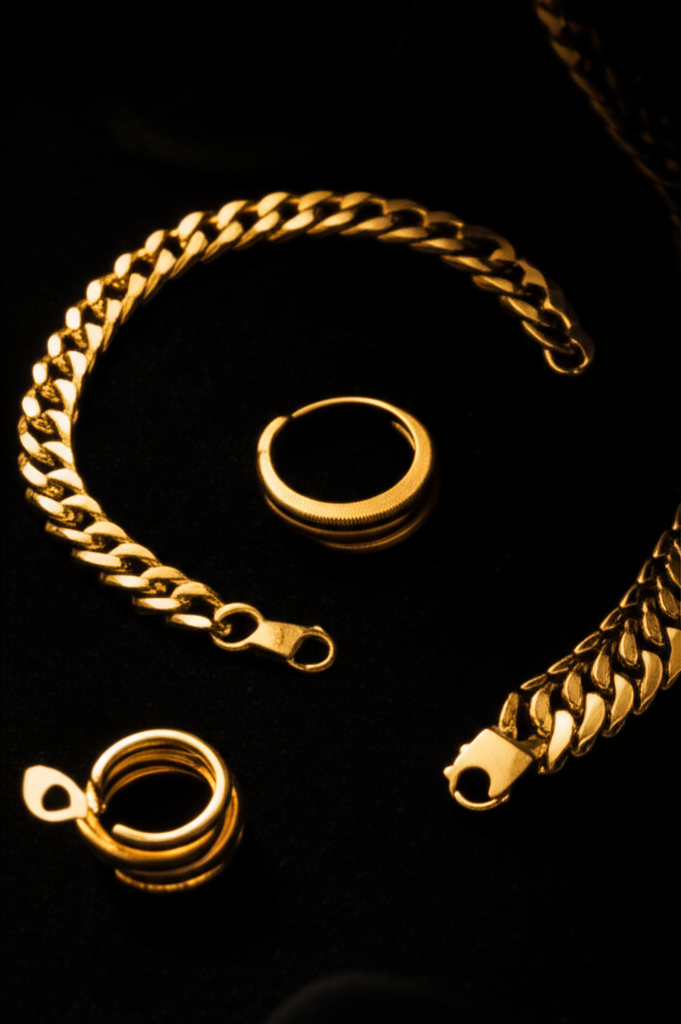
Even a broken 10k bracelet weighing 15 grams contains about 6.25 grams of pure gold (15g x 0.417).
Actual values depend on current market prices and in-person evaluation. These examples illustrate how purity and weight affect value.
What About Stones and Diamonds?
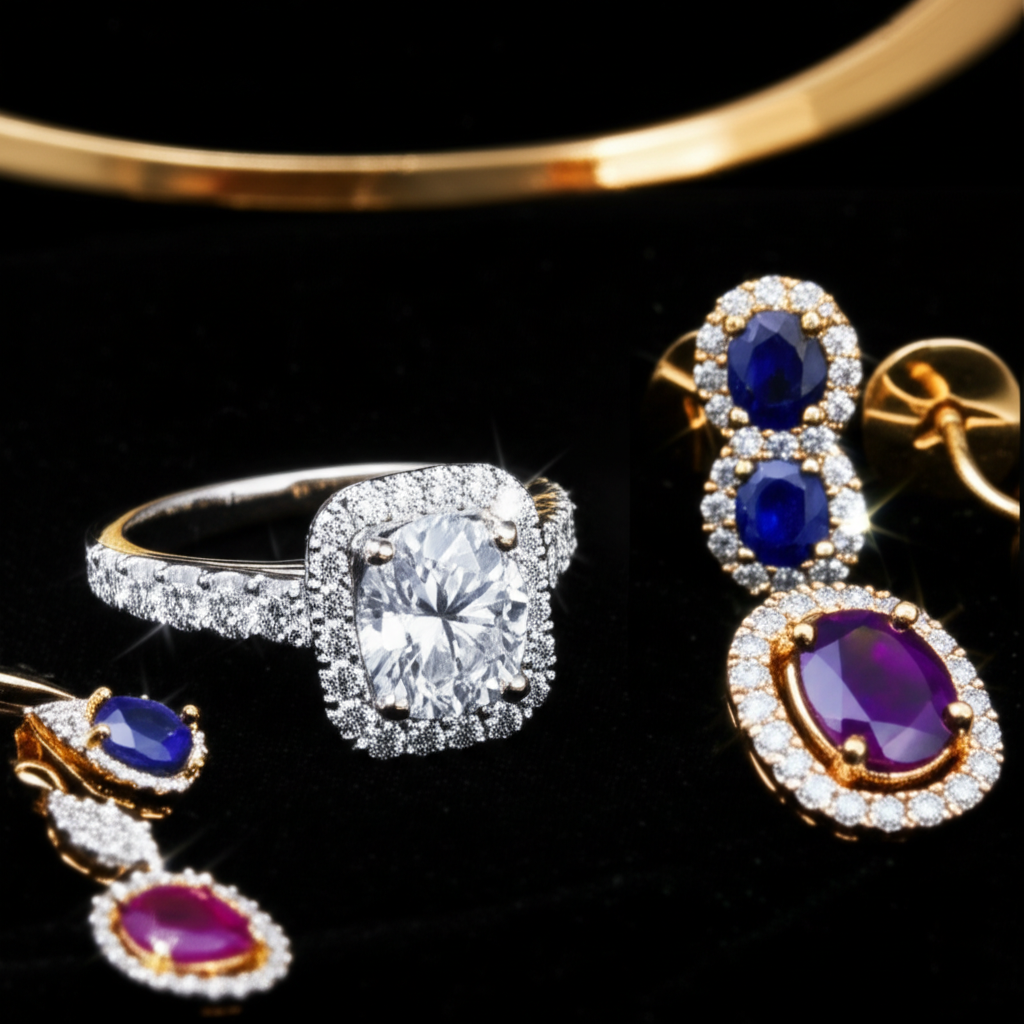
If your gold jewelry contains gemstones or diamonds, it is important to understand how they factor into the evaluation.
- Stones are typically evaluated separately from the metal
- Gold value is based on the metal weight only — the weight of stones is subtracted
- Some stones may add additional value depending on type, quality, and condition
- A professional evaluator can assess both the metal and stone components of your jewelry
Find Out What Your Gold Is Worth
Schedule a free, no-obligation evaluation with a licensed precious metals buyer.